
SAN BRUNO, Calif.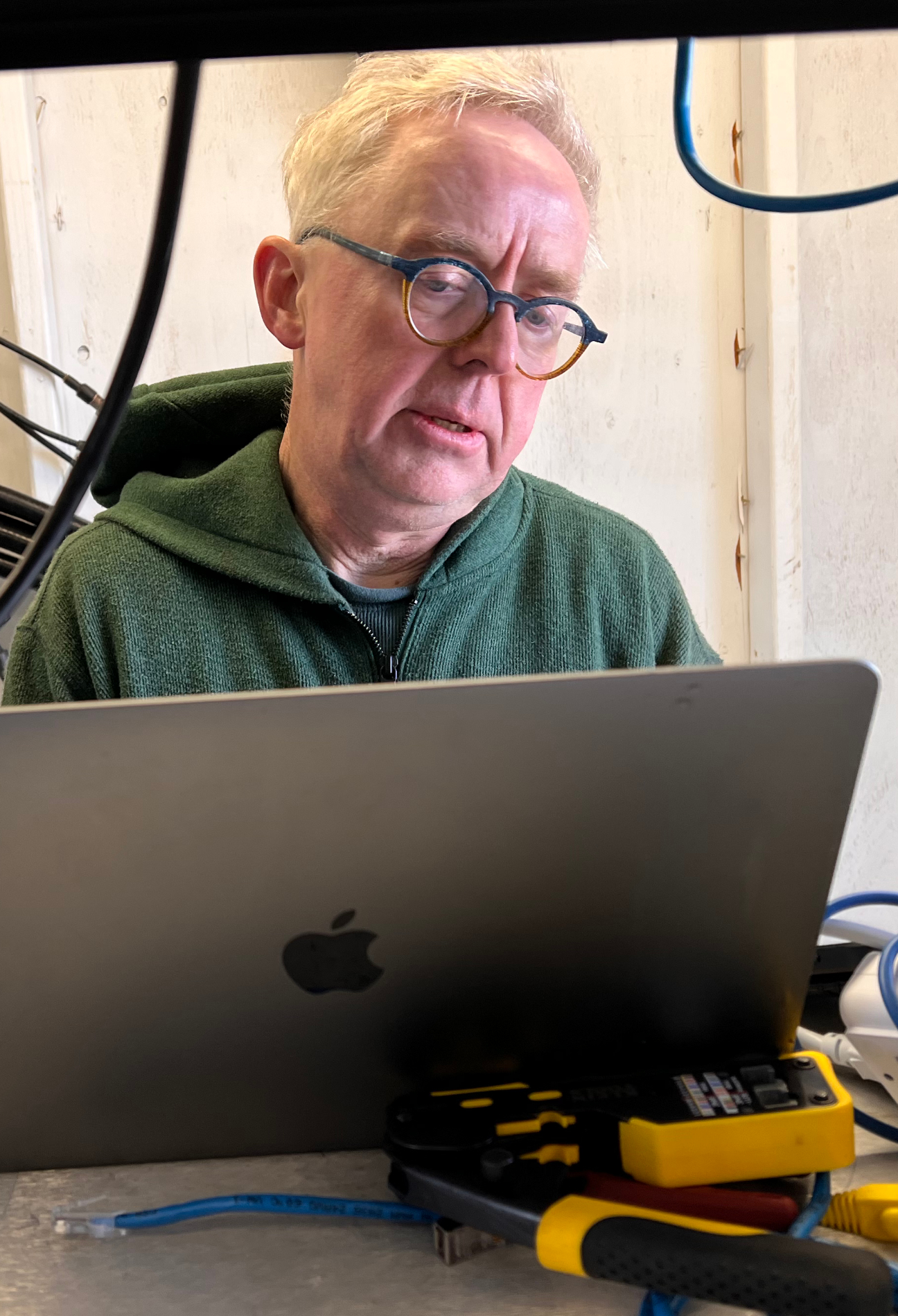 — Tim Wilkinson, a volunteer software developer for the Amateur Radio Emergency Data Network (AREDN), spoke to members of the San Bruno Amateur Radio Club (SBARC) on July 9 at the San Bruno City Emergency Operations Center, laying out the history, technology and everyday uses of the 12-year-old nonprofit project — a volunteer-built, amateur-radio-based data network designed to keep working when the ordinary internet cannot.
AREDN was started by a group of ham radio operators who wanted a better way to move pictures, video and other complex data during emergencies than voice radio allowed, Wilkinson said. Their guiding insight, he told the club, was that modern communication runs almost entirely over the internet — and that in a real emergency, the internet "might not be there," or may be overloaded or unreliable if it is. The goal became building what Wilkinson called "an amateur radio internet" that would function independent of commercial networks.
To do that, the project's founders looked at four amateur radio bands available to them — 900 MHz, 2.4 GHz, 5.8 GHz and 10 GHz — with the two middle bands overlapping the frequencies used by ordinary home Wi-Fi equipment. That overlap meant AREDN could rely on cheap, mass-produced hardware, tweaked with custom firmware, rather than requiring members to build or solder their own radios.
A Community-Built, Point-to-Point Network
Because AREDN's radio links are microwave and point-to-point, trees and mountains are significant obstacles, and a single radio typically reaches only a few miles in a given direction, Wilkinson said. Building coverage therefore depends on volunteers mounting radios on houses, towers and hilltops, each pointed at a neighboring node to relay traffic outward. "It becomes like a community effort to build one of these networks," Wilkinson said, "and that's really what AREDN is trying to use its software to do."
The result is a mesh network conceptually similar to consumer systems like Meshtastic and Meshcore, in which each radio passes data to the next until it reaches its destination. AREDN's software, Wilkinson said, is more selective than some mesh systems about how it routes that traffic, calculating the most efficient path rather than broadcasting to every node. In January, the project replaced its longtime routing protocol, known as OLSR, with a newer one called Babel, which Wilkinson said eliminated recurring "network storms" in which data packets could loop through the network indefinitely.
Inexpensive, Widely Supported Hardware
AREDN's software now supports at least 70 radio models, Wilkinson said, most of them built around off-the-shelf equipment from manufacturers such as Ubiquiti and Mikrotik and generally costing $60 to $100 apiece.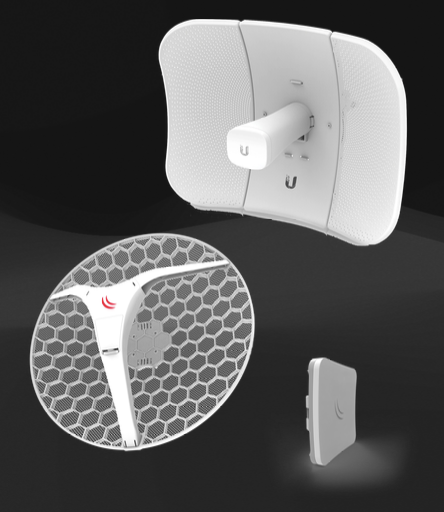 He described his own rooftop installation in Berkeley — a 2-foot dish linking across San Francisco Bay to Wolfback Mountain in Marin, paired with a horn antenna that serves as a local access point for neighboring hams — as a typical example of how individual installations extend the broader network.
Locally, the Bay Area AREDN network includes roughly 400 radios, according to Wilkinson, linking sites from Santa Cruz north to Folsom near Sacramento largely radio-to-radio, with only occasional internet-based connections bridging gaps. A backbone site on San Bruno Mountain feeds into that regional network, and local installations — including a node at San Bruno City Hall — connect through it. Wilkinson compared the Bay Area's mesh with networks in Oregon, which he said contends with especially difficult terrain, and Southern California, which he described as larger and more mature, the product of ridge-line tower projects built out over roughly two decades.
Software Designed to Configure Itself
Wilkinson, who works on AREDN's software day to day as a volunteer, said the platform has evolved considerably from its early, bare-bones interface but still aims to ask little of users: check a map to see which other nodes are visible, set a radio channel accordingly, and let the software configure the rest automatically. Built-in diagnostic tools display signal strength, error rates, bandwidth and other link data in real time, which Wilkinson said helps installers troubleshoot problems — including, in one case from his own network, a link that inexplicably performed better in the rain until he discovered a wet tree branch was the cause of the original interference. A mobile interface added in recent years also lets installers check signal strength and aim antennas directly from a phone rather than a laptop.
Every node on the network maintains a directory of the other nodes it can reach and the services each one offers, Wilkinson said. The most common of those services, by far, is cameras, which are inexpensive and simple to add to the network; AREDN's software now supports icon tags — including a dedicated camera icon — to make devices easier to find through the network's search function.
From Weather Satellites to Emergency Backup
Beyond cameras, Wilkinson said AREDN operators around the country use the network for voice-over-IP telephone exchanges, messaging apps — including one called Raven that also bridges to Meshtastic and Meshcore — video conferencing, fire and security monitoring, flight tracking, downloaded weather-satellite imagery and even a personal seismograph he keeps at his own house.
For members who cannot yet install a radio with a direct line-of-sight connection, AREDN supports internet-based "tunnel" links as an interim step — the 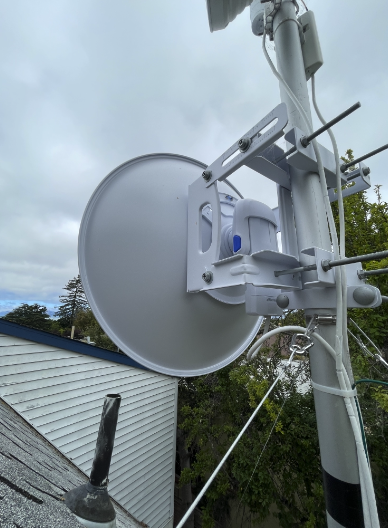 approach used by an emerging ham radio group in Turkey, and by isolated local members in Half Moon Bay and Weed, Calif., who plan to switch to direct radio links as neighboring installations come online.
Wilkinson said he expects the network's greatest value in a genuine emergency to be helping ordinary residents — not just licensed amateur operators — reach family members when commercial networks are down or overloaded. The network maintains outside connectivity through providers including Hurricane Electric and Starlink specifically to preserve that kind of link to the outside world, he said.
Participation requires only an entry-level FCC Technician license, the easiest amateur radio license to obtain. Wilkinson, who earned his own Technician license during the COVID-19 pandemic specifically to work on AREDN's software, said he has intentionally not upgraded it, in part so he can tell newcomers that the entry-level license is genuinely all that's needed to get involved.
Resources
- AREDN main website: arednmesh.org
- Bay Area Mesh wiki: wiki.bayareamesh.us
- AREDN community Slack: aredncommunity.slack.com
- AREDN world map: worldmap.arednmesh.org